Drywallers.io / PRACTICAL GUIDE
Moisture-Resistant vs Regular Drywall: Where Each Belongs
Moisture-resistant drywall handles humid rooms better than regular board, but it isn't waterproof. Here's where each type belongs in a Lower Mainland home, and what to use where water actually hits the wall.
 Drywallers.io
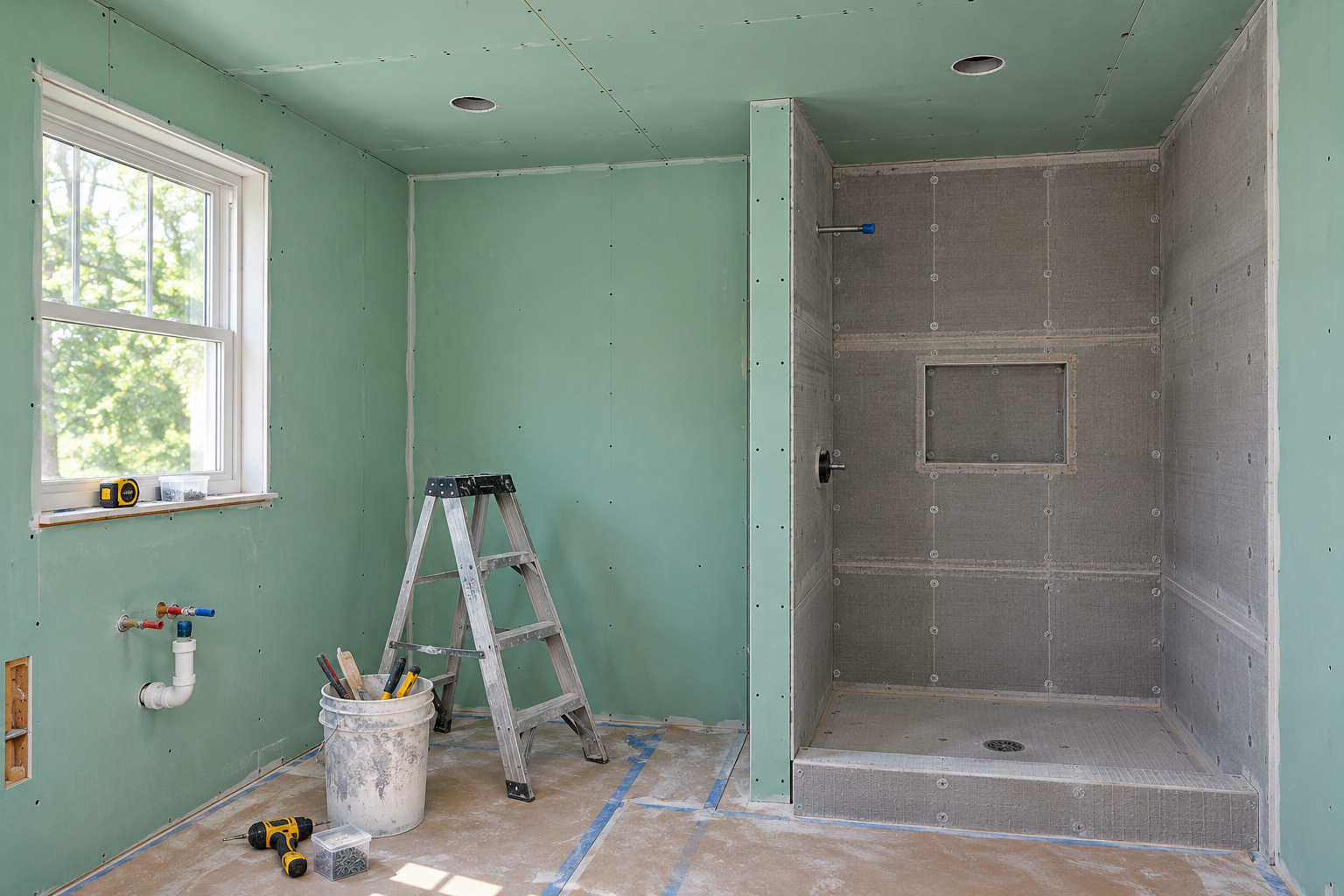
Moisture-resistant drywall is intended for suitable interior wall and ceiling applications where humidity or limited water exposure is a concern, while regular drywall suits dry living spaces such as bedrooms, living rooms and hallways. Neither ordinary board nor a moisture-resistant label makes a shower assembly waterproof. CGC's Mold Tough data sheet excludes direct-water wet-area tile applications. There is an important system-specific exception: Schluter permits drywall behind its KERDI waterproofing membrane. For a shower or tub surround, choose a complete wet-area assembly, use the exact backing and waterproofing its manufacturer specifies, and confirm local acceptance.
What makes drywall "moisture-resistant"?
Moisture- and mould-resistant drywall is still a gypsum panel with a paper or glass-mat face. Depending on the product, the core and facing are designed for moisture and mould resistance. The exact product data sheet identifies its approved applications, installation requirements and limits; board colour alone does not establish suitability.
Moisture resistance is not waterproofing. A panel intended for humid interior rooms is not automatically an approved tile backer for direct-water exposure. A complete proprietary waterproofing system may specify different acceptable backing materials.
For a homeowner, the simplest way to think about it:
- Regular drywall is for spaces that stay dry.
- Moisture-resistant drywall is for spaces that get humid or see occasional splashes.
- A complete approved wet-area system is for surfaces exposed to regular water. Its backing, membrane, seams and penetrations must follow the manufacturer's instructions.
Where each type belongs
| Location | Regular drywall | Moisture-resistant board | Wet-area tile backer |
|---|---|---|---|
| Bedrooms, living rooms, hallways | Yes | Optional | No |
| Kitchen walls and backsplash areas | Acceptable | Good choice near sinks | Not usually needed |
| Bathroom walls outside the shower | Not ideal | Yes | No |
| Bathroom ceilings outside direct water exposure | Follow product and finish specification | A suitable ceiling-rated product; observe support spacing | Follow the assembly where exposed to water or steam |
| Wall above tile in a tub or shower | Depends on exposure and complete assembly | Follow the product and system limits | Follow the wet-area system where required |
| Inside a tiled shower or tub surround | Only where specified by an approved waterproofing system | Only where specified by an approved waterproofing system | Use the backing and waterproofing specified for the complete system |
| Laundry rooms | Not ideal | Yes | No |
| Basements | Acceptable if dry | Good choice | No |
Use this table to plan questions, then check the selected panel and waterproofing system. Ceiling thickness, orientation, support spacing and finish can matter as much as moisture resistance. The assembly instructions decide what belongs in each location.
Why the shower is different
Inside a shower, water hits the wall every day and sits in grout lines, which aren't watertight. Over time, moisture works its way through to whatever is behind the tile. Gypsum, even treated, softens and loses strength when it stays wet.
CGC's moisture-resistant assemblies guide separates these situations clearly. It describes "wet areas" as surfaces that are soaked, saturated or regularly and frequently exposed to water, such as showers, tub enclosures, laundries, saunas and steam rooms, and recommends Durock cement board as a water-durable tile base for wet areas. For "intermittently wet" tile areas, it lists products like Fiberock Aqua-Tough tile backerboard, which is water-resistant through the core.
Avoid mixing details from different products. A membrane manufacturer allowing gypsum backing does not mean every moisture-resistant board or coating is approved for the same assembly. Confirm compatible materials and local requirements before covering the wall.
Fire-rated and moisture-resistant together
Some locations need both properties, such as a bathroom wall that is part of a fire separation. CGC lists Mold Tough Firecode X panels with moisture and mould resistance and a Type X core. The required fire-resistance rating belongs to the complete specified assembly, not an isolated sheet. Match the board, layers, framing, fastening and joints to the approved assembly rather than substituting based on moisture resistance alone.
Finishing moisture-resistant drywall
Outside of tiled areas, moisture-resistant board generally uses conventional gypsum finishing methods, subject to the panel manufacturer's instructions. A few tips for bathrooms and laundry rooms:
- Use the panel manufacturer's specified joint treatment. CGC setting-type compounds offer humidity resistance, but finishing still requires suitable conditions and drying.
- Prime before painting, and choose a paint designed for bathrooms or high-humidity rooms.
- Follow the complete tub or shower system detail for clearances, the tub flange and waterproofing connections.
- Use the specified compatible sealant at movement joints. Do not substitute caulk for required taped gypsum joints or fire-resistance details.
Moisture-resistant board won't fix a moisture problem
Even the best panel can't overcome a bathroom with no working exhaust fan or a basement with a leak. Health Canada's guidance on moisture and mould is consistent: control the moisture source first. In bathrooms, that means a properly vented exhaust fan that's actually used. In basements, it means fixing water entry before finishing walls.
If you're replacing drywall after a leak, our guide on repairing water-damaged drywall covers drying times and when to cut out damaged board. And if framing behind the wall has been affected, our sister site Framers.io covers the structural side.
Quick decision checklist
- Is the wall inside a shower or tub surround? Follow a complete approved wet-area system, including its specified backing and waterproofing.
- Is the room humid, or does the wall see splashes? Use a moisture-resistant panel.
- Is the wall also a fire separation? Use the board specified for the rated assembly, which may be a combined Type X and moisture-resistant panel.
- Is the space dry? Regular drywall is fine.
- Is there an underlying moisture problem? Fix that first.
Choosing the right board for each wall costs little at the planning stage and saves a lot of tearing out later.
Frequently asked questions
Can I use moisture-resistant drywall in a shower?
Not on the strength of its moisture-resistant label alone. Use a complete approved wet-area system. Some systems, such as Schluter-KERDI, specify gypsum backing behind their waterproofing membrane; follow the exact system instructions and local requirements.
Where should moisture-resistant drywall be used?
Use a suitable product in the interior locations its manufacturer permits, such as humid rooms or areas with limited water exposure. Ceiling applications must meet the product’s support and installation requirements.
Do you finish moisture-resistant drywall differently?
Follow the panel and finish manufacturers’ instructions. Joint treatment, drying, primer and finish must suit the room. Wet-area waterproofing and movement joints need their own system-specific details.
Is there drywall that is both fire-rated and moisture-resistant?
Yes. CGC offers moisture- and mould-resistant Type X panels. A required fire-resistance rating depends on the complete approved assembly, not the board alone.